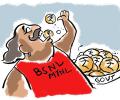
Monetising real estate assets is part of the overall relief package that would be used to retire debts, upgrade networks, and offer VRS aimed at reducing the telcos' employee strength by half.

Market concentration in the country's telecom sector continues to scale new heights despite government bailouts of public-sector Bharat Sanchar Nigam Ltd (BSNL) and Mahanagar Telephone Nigam Ltd (MTNL), and private-sector Vodafone Idea. The combined revenue (or net sales) share of the country's top two telecom operators - Bharti Airtel and Reliance Jio - in the sector's total reached an all-time high of nearly 72 per cent in FY23 from 70.4 per cent in FY22 and around 60 per cent in FY20. The net sales of Reliance Jio and Bharti Airtel India were Rs 1.67 trillion in FY23, up 18.6 per cent from the Rs 1.4 trillion a year earlier.
The asset monetisation exercise in the first phase will help BSNL shave off its Rs 14,000-crore debt. The government has said that these firms are strategically important and will not be closed down or divested.

Infrastructure and real estate prominently feature as wealth destroyers.

The decision is likely to bring additional amount of about Rs 1,500 crore or Rs 15 billion (including interest) in the books of MTNL as refund from government for the pension that the PSU paid to its employees.

The Supreme Court recently quashed a rule that mandated telecom operators to compensate consumers.
The company, which has a subscriber base of 120 million, also plans to raise funds via a bonds issue. The company's impending 4G launch is also expected in the second half of the current financial year for which it would invest Rs 12,000 crore, partly through bonds.

The government has set a total revenue target of Rs 40,874.5 crore (Rs 408.74 billion) this fiscal from spectrum, including auction amount, one-time spectrum charge and annual regular licence fee.
To revive BSNL and MTNL, DoT is taking various initiatives.

The government has been pressing citizens to pay taxes and be compliant, but they have very little to show regarding improved efficiencies in the companies they themselves own, the fund managers said.
BSNL Chairman and Managing Director P K Purwar told PTI that the scheme will be open between November 4 and December 3, and that instructions have already been given to field units to inform employees about the VRS offering.

Prasad asked private operators to play a role in skill development.

BSNL, MTNL launch free night calling to win back consumers lost to mobile boom
At present MTNL and BSNL do not impose roaming charges for mobile internet services on each others customers.

Mobile operators with the exception of Reliance Jio are in a much worse financial condition than expected earlier. The combined borrowing of the four incumbent operators - Bharti Airtel, Vodafone Idea, Bharat Sanchar Nigam (BSNL), and Mahanagar Telephone Nigam (MTNL) - reached an all-time high of Rs 3.85 trillion at the end of March this year. The companies' combined debt was up 22.4 per cent year-on-year last financial year against 8.3 per cent growth in their borrowing in the previous year. As a result, the incumbent operators' debt-equity ratio shot up to an unsustainably high level of 6.83X at the end of March this year from 2.3X at the end of March 2020. This was largely due to big losses reported by all these companies last financial year. The four incumbent operators racked up combined net losses of Rs 70,000 crore in FY21.
The government last month had approved a plum Rs 69,000 crore revival package for BSNL and MTNL that includes merging the two loss-making firms, monetising their assets and offering VRS to employees so that the combined entity turns profitable in two years.

The list is of companies declared sick as on March 31, 2014.

To revive the two state-run telecom operators, Bharat Sanchar Nigam Limited (BSNL) and Mahanagar Telephone Nigam Ltd (MTNL), the government is likely to waive the one-time fee these telcos need to pay for retaining additional spectrum.

The number of telephone subscribers in India increased from 1,183.15 million at the end of May to 1,186.63 million at the end of June.

The main losers on the Sensex were Tata Steel, Hero Moto, BHEL, ONGC & Maruti Suzuki.

Top companies have grabbed a bigger pie of their sectors in the pandemic period, leading to a further rise in market concentration in many industries as measured by the Herfindahl-Hirschman Index (HHI). The HHI score, which indicates competitive intensity in an industry (or a lack of it), reached a new high in FY21 as bigger firms raised their revenue market shares either organically or through mergers and acquisitions. A higher HHI score indicates a rise in market concentration in favour of a few firms while a lower score means that the industry's revenue is more evenly divided among many companies

Ten of top 15 companies in 1991 were PSUs; now, there are only six. Their revenue share has also fallen from 86% to 45%
BSE PSU index rallies 10% in one month; nearly a third of the stocks on the index has gained 20% over the period

'Else they will form a growing 'hospital sector' -- and the taxpayer will be asked to pick up a mounting bill,' warns T N Ninan.
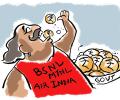
'Once we are past this electoral season, during which all promises are presented as free lunches, could we bring such non-populist issues into focus?' 'Like fixing the problems of the public sector?' points out T N Ninan.
'BSNL employee cost is Rs 14,500 crore and we anticipate that around 80,000 should opt for VRS.'

Markets snapped two-day losing streak and ended flat with a positive bias on Tuesday as gains in auto shares helped offset losses in IT majors.

Home and kitchen appliances, electronic products, apparel and B-segment cars stand to gain.

For FY16, MTNL's standalone net loss was over Rs 2,000 crore.

Rs 200-cr burden likely for TV rating agencies.

Union minister Ram Vilas Paswan appealed to people to boycott products from China and also directed officials of his ministry not to procure any Chinese products for day-to-day office use while his ministerial colleague Ramdas Athawale said all restaurants and hotels that sell Chinese food in India should be closed down.

People who are close to retirement and don't intend to go back to full-time work again should deploy a part of their VRS money in equities so that it keeps growing at a faster rate.

For 2100-MHz, 2300-MHz and 2500-MHz bands across circles; aim to offer these with 3G and 4G in February

The Mahanagar Telecom Nigam Ltd, under its customer-friendly initiatives, has reduced installation charges for new telephone connections to Rs 500 from the present Rs 800, effective April 1.

We need transformative policies and incentives with purpose, especially in solar power and digital infrastructure.

'When these fugitives flee to Karachi they don't have much to do, but tweedle their thumbs.' 'I have seen a number of criminals coming back to India because they realise they can meet more people over here.' 'After the 1993 blasts, Latif was not mentioned in the chargesheet.' 'He probably felt he could safely return to India.'

'Make in India' could suffer the same fate as did privatisation and the command economy, says Ajit Balakrishnan.
